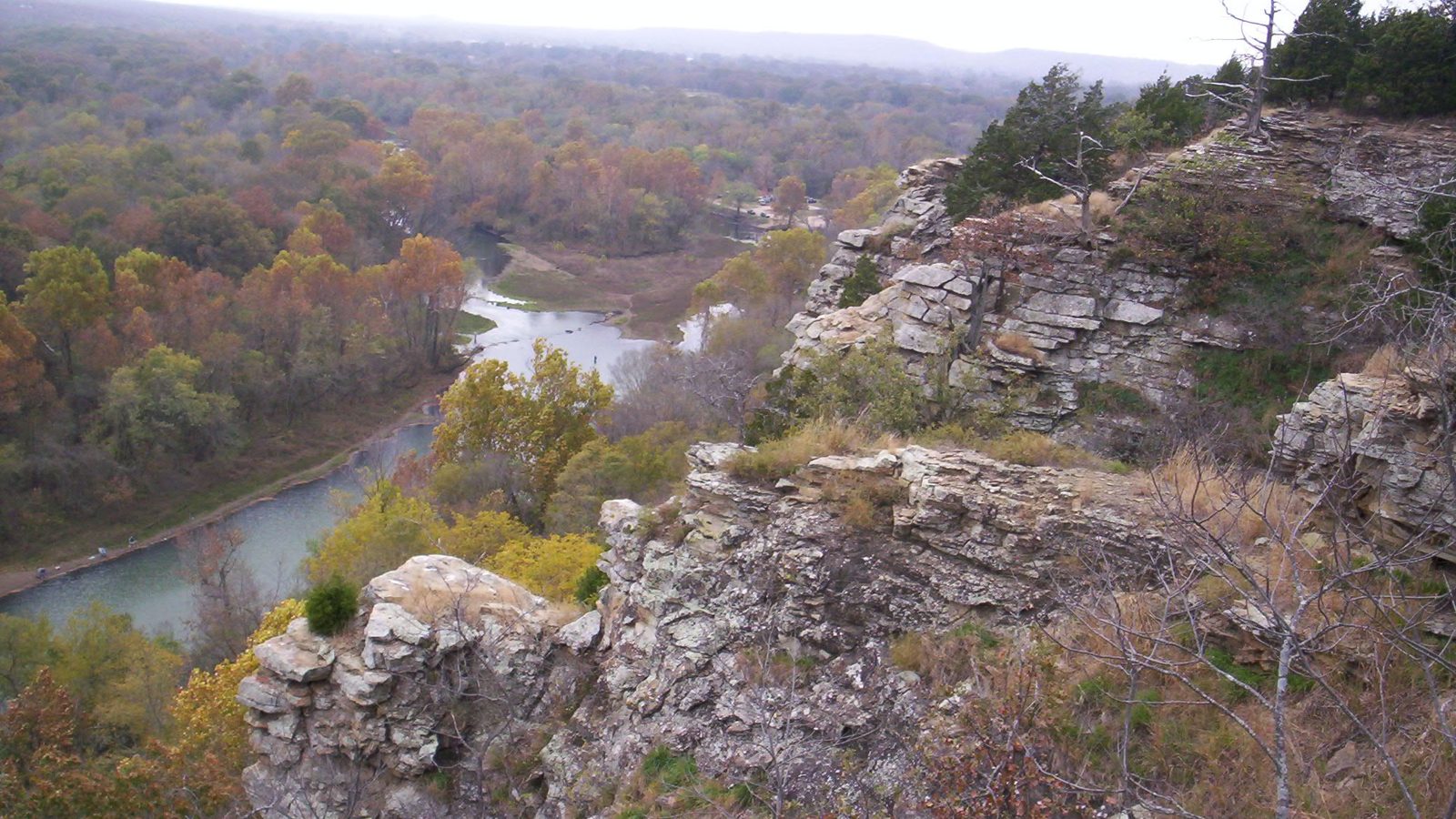
Cherokee County is hills, hollows, creeks and the Illinois River, with Tahlequah in the middle, Hulbert out west toward Fort Gibson Lake, and Cookson and Lake Tenkiller to the south. A lot of what sells here is land: a few acres for a house, 20 or 40 acres for cattle or hunting, or a bigger place for both.
If you're shopping for acreage, the price per acre is only the start. Water, road access, terrain and creeks decide what a piece of land is actually worth to you. Here's what the last year of sales looks like, and what we'd check before buying, the way we'd tell you over coffee.
The Lay of the Land
Tahlequah is the county seat and the capital of the Cherokee Nation, and it’s home to Northeastern State University. It’s the shopping, healthcare and jobs center for the county, so a lot of acreage buyers want to be within a reasonable drive of town.
Hulbert is a small town west of Tahlequah, out toward Fort Gibson Lake. The land opens up more on that side of the county, with more pasture and hay ground.
Cookson and Lake Tenkiller sit south of Tahlequah in the Cookson Hills. It’s steeper, more wooded country with a lot of lake lots and recreational land. We have a separate Lake Tenkiller & Cookson guide that covers Corps shoreline rules, docks and lake lots in detail.
In between you’ve got the Illinois River and the Baron Fork, a lot of timber, rocky hillsides, and good creek-bottom ground. Two tracts a mile apart can be completely different.
What Land Is Selling For
These are closed sales across all of Cherokee County for the 12 months ending Oct 13, 2026, compared with the 12 months before. Each size group is a small sample (8 to 28 sales), so read the band numbers as rough ballparks, not price tags. Price per acre is our own calculation from each sale (sold price ÷ acres).
Vacant land, 1+ acres
| Size | Sales | Median sold price | Median $/acre | Prior year $/acre |
|---|
| All 1+ acres | 92 (111 prior) | $91,000 | $9,616 | $9,740 |
| 1–5 acres | 28 | $54,000 | ~$24,900 | ~$24,400 |
| 5–10 acres | 21 | $65,000 | ~$12,400 | ~$9,800 |
| 10–20 acres | 17 | $110,000 | ~$7,200 | ~$8,300 |
| 20–40 acres | 13 | $169,900 | ~$7,600 | ~$5,100 |
| 40+ acres | 13 | $395,000 | ~$4,900 | ~$4,100 |
What it means: fewer tracts sold (92, down about 17%). The median sale price rose about 19%, but mostly because more of this year’s sales were bigger tracts. Per acre, overall prices were about flat. The bigger the tract, the less you pay per acre, which is normal.
Houses on 5+ acres
| Size | Sales | Median sold price | Prior year median |
|---|
| All 5+ acres | 48 (62 prior) | $396,000 | $378,400 |
| 5–10 acres | 17 | $315,000 | $281,250 |
| 10–20 acres | 14 | $373,000 | $309,900 |
| 20–40 acres | 8 | $552,500 | $447,222 |
| 40+ acres | 9 | $599,000 | $535,000 |
Fewer houses on acreage sold (48, down about 23%), and the median price was up about 5%. Typical time on the market barely moved (34 days vs 30). The price of a house with land includes the house, so don’t compare it to the per-acre land numbers above.
What We’d Check Before Buying Acreage
Water: rural water or a well
This is the first question we ask on any rural tract. Some land has a rural water district line at the road; some doesn’t, and you’ll need a well. Don’t take “water available” on faith:
- Rural water: call the district and ask whether a tap is available at that address, what it costs, and how long it takes.
- Well: look up nearby well logs on the OWRB well record search to see how deep neighbors went and what they reported, and call a local driller. Depth and cost can vary a lot over short distances in these hills.
- Existing well: ask how deep it is, how old the pump is, and whether the water’s been tested.
Access
Make sure the land touches a public, county-maintained road, or has a recorded legal easement to one. Ask whether the road is maintained year-round and whether a low-water crossing floods. A gravel road that’s fine in July can be a different story after a week of rain.
Terrain
A lot of Cherokee County is rocky and steep. Twenty acres on paper might be eight usable acres for a house, a barn and pasture. Walk it, look at a topo map, and think about where a driveway, a house pad and a septic field could actually go.
Creeks and flooding
Creeks and river frontage are a big part of the appeal here, and a big part of the risk. Check the FEMA flood map for the property. If any part is in a mapped floodplain, building there needs a Cherokee County floodplain development permit. The Illinois River and the Baron Fork are designated scenic rivers, so ask about any extra rules along them.
Septic and utilities
There’s no city sewer out in the county, so you’ll need a septic system, permitted through Oklahoma DEQ, and the soil has to work for it. Ask where the nearest power line is (running power a long way gets expensive) and what internet options actually reach the property.
Surveys, minerals and restrictions
Get a survey if the boundaries aren’t clearly marked. Ask whether mineral rights convey, and read any deed restrictions before you plan on mobile homes, livestock or a shop.
The Bottom Line
Cherokee County land prices held steady over the past year, and there’s a real range, from a few acres near Tahlequah to big hunting and cattle tracts. The price per acre gets your attention, but water, access, terrain and creeks decide what a tract is really worth to you. We’re glad to walk land with you and help you find answers. Reach out anytime.
One more thing, and we mean it: we share public resources and data here, not opinions about which area is “right” for anyone. Please look through the sources below, visit in person, and decide what fits you.